Estimated reading time: 7 minutes
Smoke detector base replacement is the part of the job that most contractors skip. Detector bases tend to stay in place when a smoke detector gets replaced. On plenty of service calls, that definitely feels efficient. The detector head is the visible component, the obvious point of failure, and the part that usually gets the attention first.
But on aging fire alarm systems, the base is often where the real problem begins.
A detector base is not just a mounting point. It is part of the electrical path, part of the device assembly, and in many cases part of the troubleshooting problem. Missing devices, map faults, intermittent ground faults, and unrecognized address conditions do not always trace back to the detector head. Often, the underlying issue is a deteriorated base that was left behind when the detector was replaced.
For contractors servicing older systems, replacing the base at the same time as the detector is often the cleaner repair.
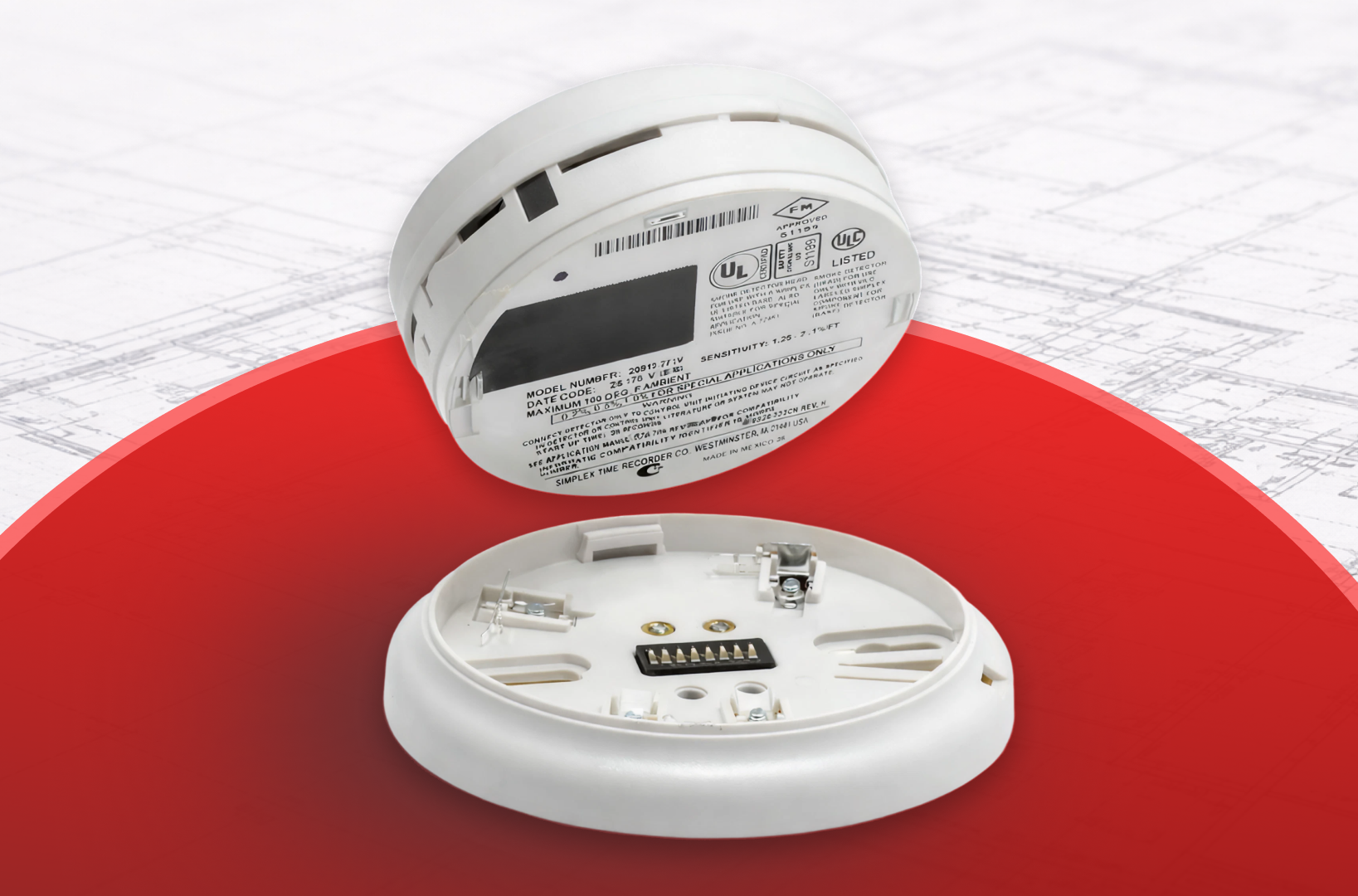
A detector base does more than hold the device in place. Depending on the system, the base may be responsible for terminal connections, grounding, addressing, relay functions, isolator functions, or local sounder functions. In some applications, it is an active part of how the detector communicates with the system and how related outputs are handled.
That matters because when a device stops reporting consistently, the failure is not always in the sensing chamber. It may be in the contact points, the terminal assembly, the address mechanism, or the base hardware itself.
This is especially true on addressable systems, where a bad base can create symptoms that look like a panel problem, a wiring issue, or a failed detector when the real fault is sitting above the ceiling tile at the point of connecting
Detector bases age the same way other device components age. Plastic becomes brittle. Terminal assemblies loosen. Locking tabs wear down. Contact surfaces corrode or lose tension. Small components that were once securely held begin to fail under normal service conditions.
Those failures show up in ordinary ways. A detector no longer seats correctly, and a terminal cracks when a conductor is re-landed. A grounding wire loses reliable contact. An address card or switch becomes unstable. A locking tab breaks during a routine device change. The detector head is new, but the point of connection underneath it is not.
These are the kinds of problems that create repeat service calls. The detector gets replaced, the panel is restored, and the same trouble returns later because the actual failure point was never removed.
When a detector base begins to fail, the panel usually reports the symptom rather than the source.
One common result is a missing device condition or map fault. The detector may still be installed, but if the base terminals are worn or the contact path is inconsistent, the panel may see the device as absent or unstable. The problem appears to be the detector when the actual failure is the base connection.
Ground faults can originate there as well. If the grounding path is compromised or if conductor insulation has been damaged around a deteriorated terminal point, the resulting trouble may look like a field wiring issue when the failure is local to the base.
Address-related troubles are another example. On systems where device identity depends on addressing components associated with the base or the device connection at the base, a damaged switch, broken card, or poor contact can create unrecognized device conditions or incorrect reporting at the panel.
These are the kinds of intermittent faults that consume time because they do not present as clear hard failures. They come and go, which is exactly why old bases get missed
When a detector reaches the end of its service life, replacing only the head may restore operation, but only temporarily. It may also leave behind the exact component that caused the trouble in the first place.
If the base has the same age, same environmental exposure, and same maintenance history as the detector being removed, there is a reasonable chance it is nearing the same point of failure. Leaving it in place may reduce material cost on the front end, but it can increase the likelihood of another truck roll later.
That is why replacing the base with the detector is often the better long-term practice, especially on older commercial systems or in locations with repeated device-level troubles. It reduces the chance that a new detector will be installed onto an unstable mechanical or electrical connection.
The point is not that every base must always be replaced regardless of condition. The point is that the base should be evaluated as an active component, not assumed to be a permanent accessory.
Smoke detector base replacement only helps if the replacement is the correct one.
Detector bases vary by function, compatibility, and form factor. Some are standard addressable bases. Others include relay functions, isolator functions, or integral sounder capability. Some are used in applications tied to auxiliary control sequences or specialized notification functions. Physical size also varies, including standard 4-inch and trim-style 6-inch bases, along with different finishes and colors depending on the environment.
This is where ordering errors happen. Two bases may look similar and still be electrically or functionally different. The safe assumption is not that a base is interchangeable because it fits the same detector physically. Compatibility should be verified at the panel, detector family, and application level before ordering replacements.
That matters even more on legacy systems, where years of service work may have introduced substitutions that are no longer obvious from a visual check alone.
See NFPA 72 Chapter 17 for initiating device requirements that govern how addressable bases must function within the system.
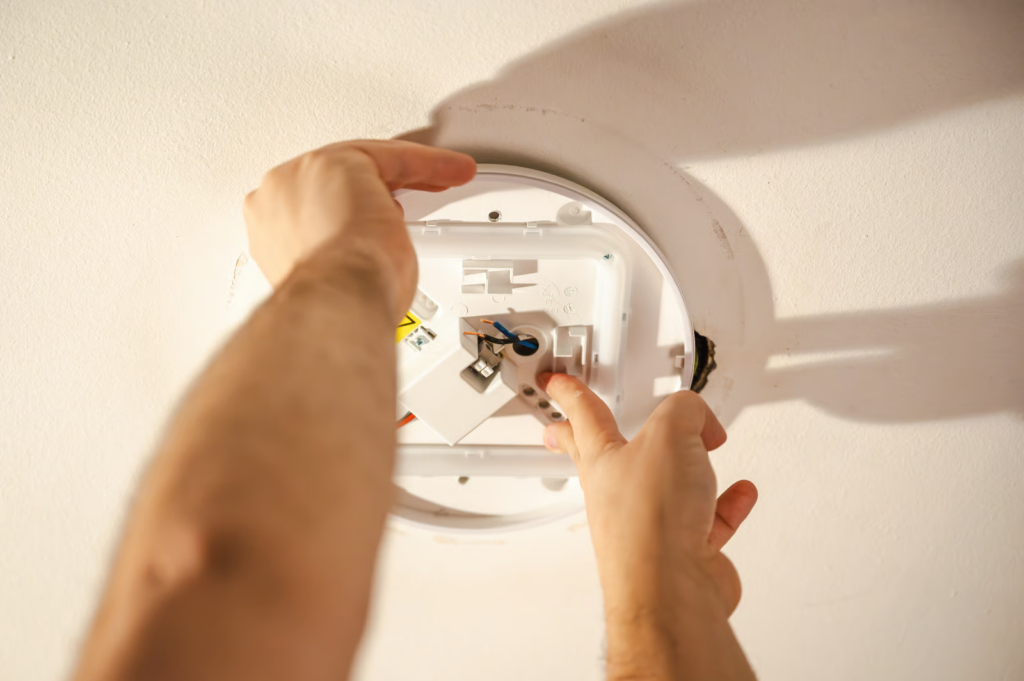
If a detector is being replaced because of age, repeated trouble history, poor seating, or questionable contact, the base should be inspected with the same level of scrutiny as the detector head.
Look at the terminal condition. Look at the contact surfaces. Look at the locking features, grounding path, and any addressing components. If those parts show brittleness, cracking, looseness, inconsistent contact, or visible wear, replacing only the detector is incomplete work.
For service teams dealing with recurring map faults, missing devices, or intermittent ground conditions, the detector base should move much higher on the troubleshooting list.
Many repeat fire alarm troubles are not mysterious. They are aging components left in place because they are less visible than the device attached to them.
Detector bases are part of an active fire alarm circuit and should only be replaced by a qualified fire alarm technician. The control panel should be properly powered down before replacement, and the work should be performed in accordance with manufacturer instructions, system requirements, and site conditions.
This is not a live-swap component. Base replacement should be handled the same way any other device-level work is handled on a fire alarm system: planned, documented, and done correctly.
Detector bases are easy to overlook because they rarely get treated as the component most likely to fail. But in many systems, they are exactly where the problem starts.
They carry the wiring. They hold the contacts. They may contain the relay, isolator, or sounder function. They age. They loosen. They crack. And when they fail, the panel reports the symptom, not the cause.
Replacing the detector while leaving behind a worn base often means leaving behind the real problem.
On aging fire alarm systems, replacing the base at the same time as the detector is not overkill. In many cases, it is the cleaner repair.
On your next detector replacement, inspect the base before reusing it by default. If the device has a history of intermittent troubles, poor seating, address issues, or wiring-related faults, treat the base as a likely failure point and verify the correct replacement type before ordering.
Find detector bases at FireAlarm.com, including addressable, relay, isolator, and sounder bases organized by detector family and application.