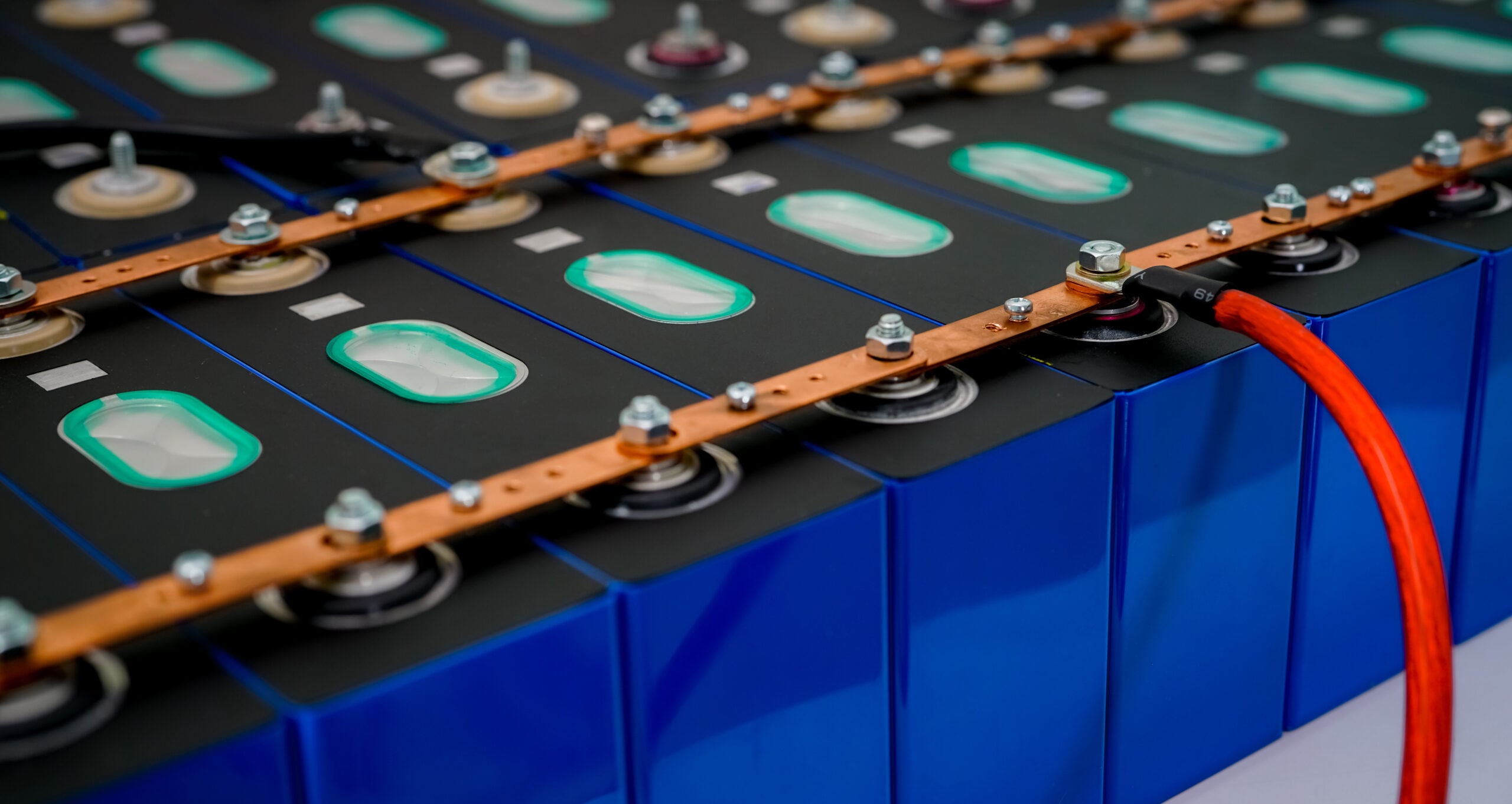
Lithium-ion battery fire risk is more abundant in the summer because its the busiest season in construction and, increasingly, one of the most dangerous for fire. Longer days mean more tool use, more charging cycles, and more batteries sitting in direct sun or inside equipment enclosures where temperatures climb far past what the cells are designed to handle. Most of the attention in fire safety circles has focused on lithium-ion storage at the utility and warehouse scale. Lithium-ion battery fire risk on the construction jobsite is a different problem, and it is underserved.
A typical crew handles dozens of tool batteries per shift: drills, saws, impact drivers, lighting rigs, and radios. When ambient temperatures exceed 100 degrees Fahrenheit, which is routine across much of the country from June through September, those batteries are already operating near the edge of their thermal limits before the first charge cycle of the day. The workers handling them are almost never trained to recognize a cell that is approaching failure.
That gap, between what responsible site management requires and what most crews actually know, is what this article is about.
Thermal runaway is not a battery exploding. It is a chain reaction inside the cell. When heat, damage, or overcharging causes one cell to fail, it releases heat that drives adjacent cells to fail in sequence. The reaction is self-sustaining. Once it starts, it does not need an external ignition source to continue. Understanding this mechanism is the starting point for managing lithium-ion battery fire risk on an active site.
Unlike a paper or wood fire, which stops when the fuel is consumed, a lithium-ion fire can appear extinguished and then re-ignite minutes or hours later as the chemical reaction resumes inside remaining cells. Large volumes of water are required, not to suppress combustion in the traditional sense, but to cool the cells and interrupt the reaction. This has direct implications for jobsite fire response and for how a Fire Prevention Program Manager structures the site’s emergency procedures.
The triggers on a summer construction site are specific: ambient heat above the cell’s rated storage temperature, direct sun exposure on stored packs, charging immediately after heavy use without a cooldown period, physical damage from drops or crushing, and continued use of a battery showing deformation, unusual heat, or a swollen case.
NFPA 241, Standard for Safeguarding Construction, Alteration, and Demolition Operations, is the primary standard governing fire safety on active construction sites. The current edition addresses storage of hazardous materials and combustible materials broadly, and its requirements for the Fire Prevention Program Manager include oversight of ignition sources and storage practices across the site. As lithium-ion battery fire risk becomes better documented across the industry, standards bodies are beginning to address it directly rather than folding it into general hazardous materials language.
The 2027 edition of NFPA 241 is currently in development, and is expected to include specific guidance on lithium-ion batteries on construction sites. If that addition is confirmed in the published text, it will be the first time the standard addresses tool-scale battery risk directly rather than leaving it to general hazardous material handling provisions. Sites preparing for projects that will span the adoption window should begin building compliant battery management procedures now, before the requirement is codified.
OSHA does not currently have a standalone standard dedicated to lithium-ion battery safety. The agency has addressed the hazard through hazard bulletins and, more recently, through a record keeping interpretation issued in 2026. The practical result is that OSHA enforcement on battery-related incidents currently flows through general duty clause citations rather than a specific rule. That enforcement posture can change quickly as incident data accumulates.
If you have read our breakdown of the Fire Prevention Program Manager role under NFPA 241, you already know that the FPPM bears responsibility for identifying and controlling ignition sources across the site. Tool batteries are an ignition source. They belong in the FPPM’s written program
Most jobsite battery protocols, where they exist at all, address overnight storage and not much else. The actual risk profile is more granular than that.
Charging is the highest-risk period. A battery that has been run hard in 95-degree heat and then plugged into a charger immediately is thermally stressed from both directions. The charging process generates heat inside the cell at the same time the ambient environment is already pushing cell temperature up. Charging should happen in shaded, ventilated locations and only after a pack has cooled. Chargers should never be left unattended in enclosed spaces, vehicles, or tool trailers.
Storage is the second failure point. Batteries sitting in the back of a pickup truck in direct sun, inside a closed gang box, or on the floor of a portable building can reach temperatures that exceed rated maximums within an hour on a summer afternoon. [VERIFY: cite a specific rated maximum storage temperature range for common lithium-ion tool battery chemistries, typically in the range of 40-50 degrees Celsius, sourced from a manufacturer specification or IEC standard] Visible signs of thermal stress include a case that is warm to the touch without having been recently used, visible swelling or deformation, and any discoloration around the terminals.
Damaged batteries require a specific response. A pack that has been dropped from height, run over, or crushed should be treated as potentially compromised even if it shows no visible damage. It should be removed from service, placed in a non-combustible container with some physical separation from other materials, and not charged. The site’s written program should specify how compromised packs are flagged, isolated, and disposed of.
Fire response for a lithium-ion battery fire on a construction site is not the same as for a smoldering material fire. The volume of water required is substantially higher. Workers need to know in advance not to use a CO2 or dry chemical extinguisher as the primary response, and they need to know that apparent suppression does not mean the threat is resolved. Post-incident monitoring is required.
The most common failure mode in jobsite battery management is not ignorance of the risk. It is a written policy that satisfies a pre-task checklist and then stops there.
A site may have a policy that says “store batteries in a cool, dry location.” That sentence does not define cool. It does not say what happens when the only available storage is a tool trailer that reaches 130 degrees inside by noon. It does not assign anyone responsibility for inspecting packs before charging or for removing a damaged pack from rotation.
The FPPM’s job is to close that gap. The battery management section of the Fire Prevention Program needs the same specificity as the hot work permit section: who inspects, what they inspect for, what the threshold for removal from service is, where compromised packs go, and who the escalation contact is when something looks wrong.

Lithium-ion battery fire risk does not stay contained to the battery itself. When a lithium-ion battery fire occurs on a construction site, the consequences extend well beyond the fire itself.
Practical fire protection work happens before the incident. For battery management on a summer project, the questions to ask are:
Does the site’s Fire Prevention Program specifically address lithium-ion battery charging, storage, and damage inspection?
Does it name who is responsible for each of those tasks?
Is there a defined temperature threshold above which charging is prohibited in unventilated spaces?
Is there a written procedure for a compromised pack, including where it goes and who decides when it leaves the site?
Have workers received task-specific training on recognizing thermal runaway signs and on the correct fire response for a battery fire?
If any of those answers is no, or if the written program exists but no one on site can point to who owns each item, the program is not operational.
Lithium-ion battery risk on construction sites is not a new problem. It is a problem that is finally getting the regulatory attention it has needed. The expected additions to the 2027 NFPA 241 edition signal that the technical community has reached the same conclusion that incident data has been pointing toward for several years.
The sites that will be prepared for that edition are the ones building specific, accountable battery management procedures into their Fire Prevention Programs now, during the current edition’s authority. The FPPM is the right person to own that work.
For help building compliant fire prevention programs, specifying temporary alarm systems, or sourcing the equipment your site needs, visit FireAlarm.com Services. If you want to go deeper on where NFPA 241 is heading and how it affects active projects, The FireAlarm.com Show covers this territory as the standard develops.
Additionally, FireAlarm.com Plus gives you on-demand access to our AI Assistant, a knowledge base built on Wayne D. Moore’s decades of real-world fire alarm expertise.