This article is brought to you by our Partner Sponsor.

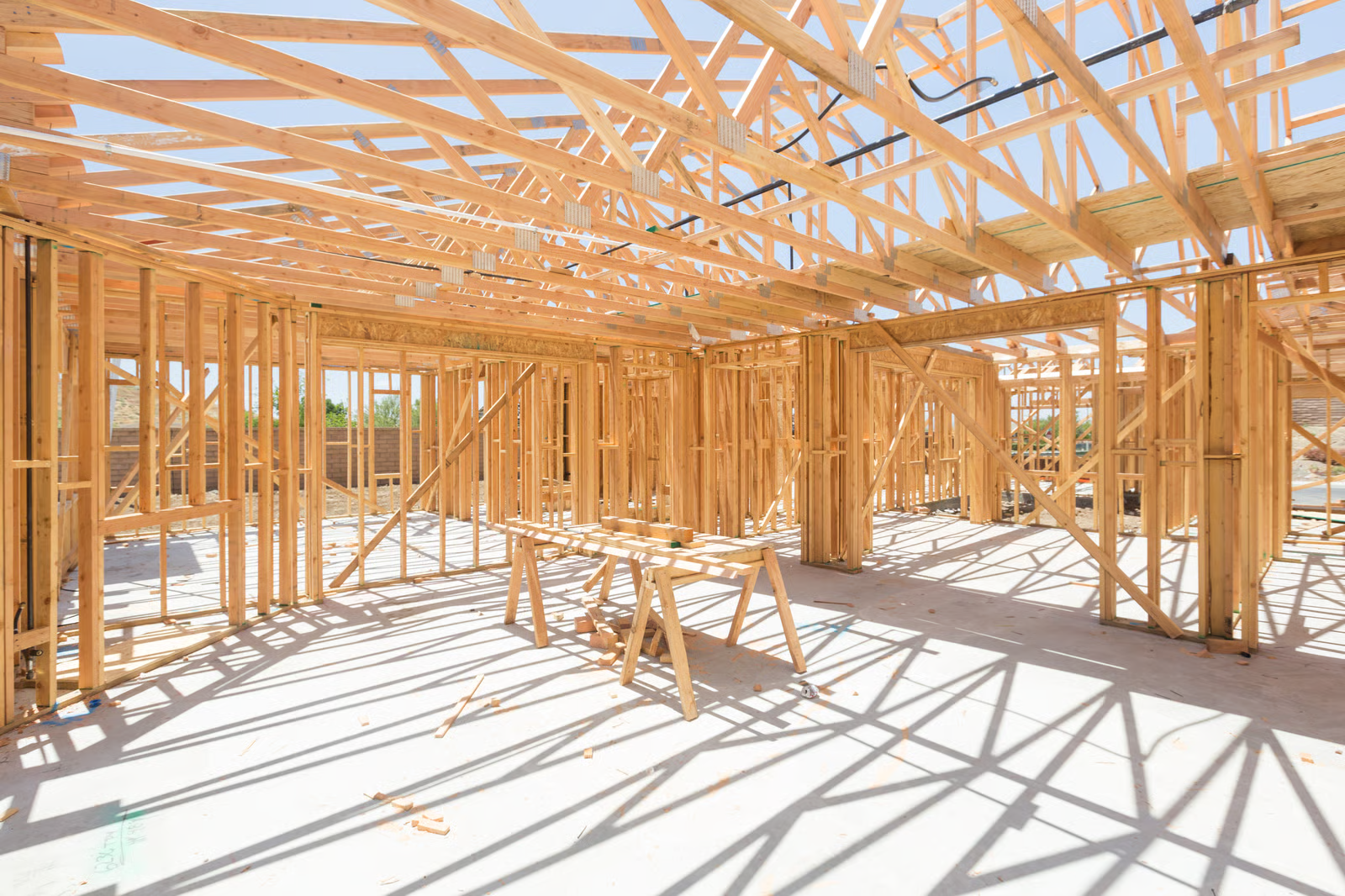
In my years of working with general contractors, I find they tend to use “tried and true” methods or the easy way to “check the box” for their life safety compliance needs during construction. Fire watches are typically used during construction and typically they involve using a roving individual with a portable air horn to notify workers of a fire emergency or when they are there at night they are required to call the fire department. This is the “old” way and extremely unreliable. The first issue with reliability is that humans are involved. Humans take breaks, humans can be in the wrong location when an event takes place, humans can delay notification because they fear they will be accused of “crying wolf” and humans can fall asleep during their night shift. The second issue is that wood construction is always at risk of fire and because high rise building can now be made with timber construction the risk has increased exponentially. The need for temporary fire alarm systems during construction has never been greater, yet too many projects still rely on methods that have not kept pace with the risks we face today.
The NFPA Research Foundation reports that there were 4,300 construction fires in the US that occurred each year on average between 2016 and 2020. These fires occurred during construction, renovation, and demolition and caused 5 civilian deaths, 62 civilian injuries, and $375 million in property damage.
Additional examples include the Waltham, MA, Apartment complex fire in 2017. All 5 buildings in this complex containing 246 units were of wood construction, completely framed and destroyed by the fire. The cause was arson resulting in a 10-alarm fire and 4 firefighter injuries; The Weymouth, MA, apartment fire also occurred in 2017, a 50 unit, 4 story, wood construction building also resulted in a total loss, with its cause unknown; and finally, the Dorchester, MA apartment fire, a building with 6 stories, 83 units, wood construction, resulting in a total loss. The cause was a generator failure. The research foundation feels the best way to prevent destruction, construction delays, injuries, and increased expenses is to comply with NFPA 241, Standard for Safeguarding Construction, Alteration, and Demolition Operations and to install a temporary fire alarm system.
Chapter 33, Safeguards During Construction, of the International Building Code (IBC) sends you to Chapter 33 Fire Safety During Construction And Demolition of the International Fire Code (IFC) for the requirements applicable to structures during construction, alteration or demolition, including those in underground locations. Compliance with NFPA 241 is required [Emphasis added] for items not specifically addressed in the IFC.
Keep in mind that when the IBC or IFC is adopted by a jurisdiction, the requirements contained in the Code become Law. When NFPA 241 is referenced or as is now the case in the IFC required, the requirements contained therein become Law also.
Additionally, Chapter 33 of the International Building Code states: “The most critical period in building construction related to the safety of those on-the-job site is when all building components have not yet been completed. Compounding this incomplete state is the use of dangerous construction methods, materials and equipment.” The IBC also states, “The owner or owner’s authorized agent shall be responsible for the development, implementation and maintenance of a written plan establishing a fire prevention program at the project site applicable throughout all phases of the construction, repair, alteration or demolition work.”
Additionally, NFPA 241 requires, “Where an entirely new structure is being constructed, the owner should ensure that specifications for new buildings contain a clause stating that ‘the contractor will take all reasonable precautions against fire in accordance with good fire protection engineering practice.’”
The loss-prevention responsibility always remains with the owner of a building. However, most owners transfer all loss-prevention recommendations they receive from the fire department with the expectation that these recommendations will be accomplished by the general contractor and provider of a temporary fire alarm system.
The most common causes of under temporary fire alarm systems during construction fires in the most recent five-year period, as well as historically, are electrical distribution and lighting equipment; heating equipment; cooking equipment; a torch, burner, or soldering iron; or an intentional cause. Recently the proliferation of battery-operated tools has been shown to be creating a fire hazard when the batteries are charging. General contractors can make rules that prohibit subcontractors from leaving their batteries on charge on site but inevitably someone will choose to break the rule. Regardless, there is a history of these charging batteries causing fires and that coupled with delayed notification of the fire department results in a complete loss of the framed building. For each of these causes, there are safety protocols that can be utilized to reduce the risk of fire.
The safety protocols can include the following (From NFPA’s Construction Site Fire Safety Fact Sheet):
And I would add a more current issue:
Some of the key issues that must be understood include:
Complying with NFPA 241 helps you manage and mitigate risk presented by timber construction and the construction activities that can lead to catastrophic and costly events at construction sites. NFPA 241 recognizes that the current requirement for a fire watch does not provide adequate protection for a building under construction. That is why NFPA 241 recommends you install a temporary fire alarm system to meet the requirements of the IFC and the local fire department.
I see the detection and notification of a fire as the biggest gap in fire protection in timber-built structures. Obviously, trying to wire a fire alarm system in a timber-built building under construction presents many challenges. And it should be obvious that the problems presented are dynamic in nature because the building is changing daily. The need for reliable temporary fire alarm systems must be installed in accordance with the requirements found in NFPA Chapter 28, Temporary Fire Alarm Systems.
The ideal system to meet these requirements is a reliable wireless system such as the one manufactured by RamTech and distributed by authorized fire alarm companies throughout the United States. Using a temporary wireless system such as the WES3 from RamTech can help reduce your risk for fires growing out of control. It uses a mesh operating protocol which provides reliable communication to all devices and notification appliances. The system can be connected to a remote supervising station and can provide system information to a smart phone. The system can be modified as the building construction changes and ultimately the wireless system can be reused on future construction sites.
The following admonitions are from the National Fire Protection Association’s Construction Site Fire Safety Fact Sheet:
If you are a code official, you MUST know and enforce the requirements of NFPA 241 for buildings under construction, alteration, or demolition.
If you are a fire chief, ensure your department is involved in pre-fire planning for buildings under construction, alteration, or demolition.
If you are a building owner with a building under construction, alteration, or demolition, you MUST have a fire prevention program manager (FPPM) per NFPA 241.
If you are a contractor or someone working on a job site, you MUST follow NFPA 241 and the direction of the FPPM.
Remember traditional approaches to fire safety for buildings under construction are not satisfactory because they have not kept pace with new technology and new approaches to the fire safety issue encountered in high rise timber construction. We have better standards with up-to-date requirements that provide better options to meet our fire safety goals. And a wireless temporary fire alarm system, like the RamTech fire alarm system, becomes an investment rather than an additional cost of construction.
Want to work directly with Wayne D. Moore? Learn more about his consulting services here.
NFPA Research, Building and Life Safety, Fires in Structures Under Construction
Richard Campbell 01-Oct-2023
National Fire Protection Association’s Construction Site Fire Safety Fact Sheet, 2022
Fires in Structures under Construction, (2022) NFPA Research.
NFPA 72-2028 (Proposed) National Fire Alarm and Signaling Code, Draft Chapter 28,
Temporary Fire alarm Systems
NFPA 241, Standard for Safeguarding Construction, Alteration, and Demolition
Operations, 2022
The Future of the Industry: More Answers to Your Fire Alarm System Installation
Questions, Wayne D. Moore Jan 24, 2024, Electrical Contractor
Temporary Fire Alarm Systems: When are they needed and what protection should be
in place? Wayne D. Moore, Dec 11, 2024, Electrical Contractor
International Building Code, 2018 edition
International Fire Code, 2018 edition

About The Author
Wayne D. Moore, PE, is a licensed professional fire protection engineer, located in Jamestown, RI. He is the Editor of five editions of the National Fire Alarm Code Handbook. In December of 2012, NFPA published his new book, “Designing Mass Notification Systems: A Pathway to Effective Communications.” He is the 2009 recipient of the NFPA Standards Medal. He is a Principal member of NFPA 72 Correlating Committee and former chair, now Principal member of the Emergency Communications System Technical Committee. Moore can be reached at [email protected].