
When a building is under construction, renovation, or demolition, its permanent fire alarm system is either not yet installed or temporarily out of service. That gap in protection is not optional to address. NFPA 241, the Standard for Safeguarding Construction, Alteration, and Demolition Operations, requires fire protection to be maintained throughout those phases, and a temporary fire alarm system is one of the primary tools for meeting that requirement.
If you have read our breakdown of the Fire Prevention Program Manager role, you already know that NFPA 241 puts the responsibility for fire protection directly on the owner and the designated FPPM. Selecting the right temporary fire alarm solution is one of the first practical decisions that falls under that responsibility.
This article explains the two approaches to temporary fire alarm protection, what separates them, and what questions to ask before choosing one for your project.
A temporary fire alarm system is a fire detection and notification system installed for the duration of a construction, renovation, or demolition project. It is not a permanent system and is not intended to meet the same standards as the fixed system that will eventually serve the building. Its job is to detect fire conditions during the period when the permanent system cannot, and to alert workers and trigger a response before a fire spreads on an active site.
Temporary systems vary significantly in complexity. Some are compact, wireless, and designed to be deployed in hours. Others are engineered from components to match the specific conditions of a large or complex building. Understanding which category fits your project is the first decision to make.
The first approach is a purpose-built, packaged temporary fire alarm system. These are wireless solutions designed specifically for construction sites, built to deploy fast, move as the project progresses, and cover sites where running cable is not practical or not yet possible.
Ramtech Global’s WES3 system is an example of this category. It is a wireless fire alarm and emergency warning system built for construction environments, with interconnected devices that can alert an entire site from a single trigger point. As a packaged solution, it is designed to be operational quickly without requiring engineered drawings or custom configuration for every deployment.
Ready-made systems fit a wide range of construction projects, particularly those where speed of deployment matters, where the site layout changes frequently, and where the project scope does not require custom detection engineering.
The second approach is a custom-engineered temporary system, built from components rather than sold as a single packaged product. This type of solution may combine several detection technologies depending on the conditions of the site: Linear Heat Detection for areas where smoke detection is not practical, wireless devices for portions of the site without power infrastructure, conventional fire alarm equipment where wired circuits are appropriate, and fire watch technologies such as Fike Robotic Fire Watch for continuous monitoring in high-risk areas.
Engineered temporary solutions are better suited to complex buildings, unusual site conditions, or projects where a packaged system cannot address the full scope of what the AHJ or the owner’s fire prevention program requires. They take longer to specify and deploy, but they can be designed to match exactly what the project demands.
This is where FireAlarm.com‘s engineering expertise becomes the deciding factor. Not every temporary fire protection need can be solved with a single product page. Some projects require a designed answer, and that requires working with people who understand both the code requirements and the available technologies.
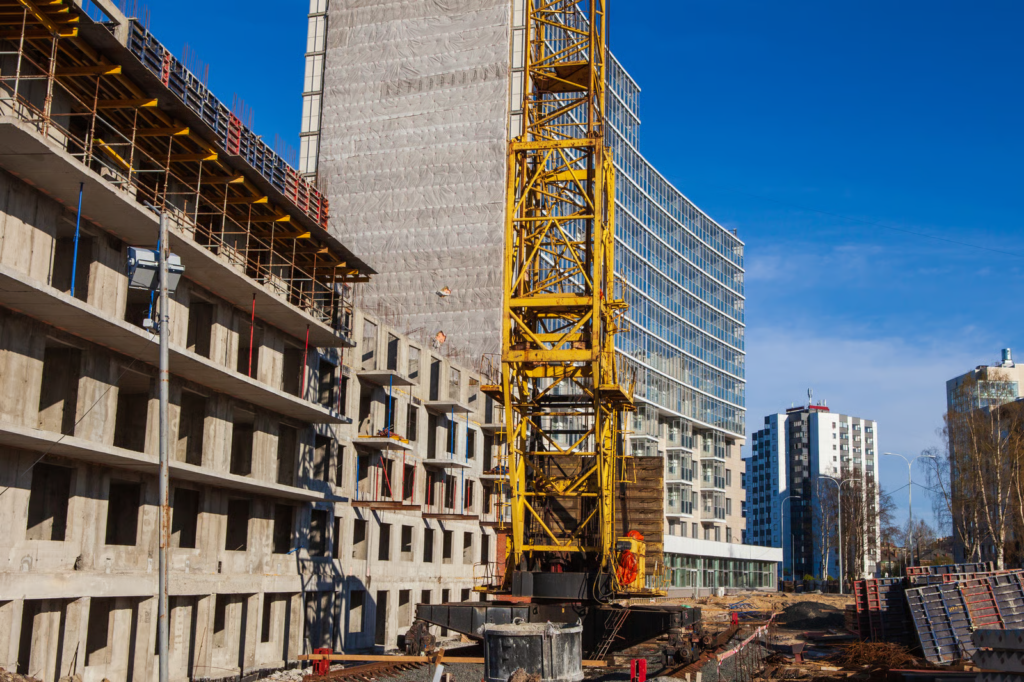
Whether you are evaluating a ready-made system or working toward an engineered solution, the following questions help diagnose which approach fits your project and what the system needs to do.
The first set of questions is about deployment and detection. Construction sites change constantly, and a system that takes days to reconfigure every time the active work area shifts creates compliance gaps and schedule delays. Wireless systems have a clear advantage in this regard: they can be redeployed without rewiring as the project progresses. Beyond mobility, consider what the site actually requires in terms of detection technology. Smoke detection works well in enclosed spaces but can produce nuisance alarms in open or dusty construction environments. Heat detection is more appropriate for areas with high particulate levels or where smoke is a byproduct of the work itself. Manual call points give workers a way to trigger an alert regardless of what the automatic detection picks up. Most projects require more than one detection type, and the right combination depends on what is happening on the site at any given phase. The National Fire Protection Association’s construction fire safety resources offer useful context on where construction fires most commonly originate and what detection gaps they tend to expose.
The second set of questions is about coverage, power, and interconnection. A system that covers a small interior renovation does not automatically scale to a multi-story structure or a campus with several active buildings. Confirm that the system you are evaluating can cover the full footprint of your project and that it can expand as the scope grows without requiring a full replacement. Equally important is how devices communicate with each other: a fire alarm system that only alerts the area immediately around the triggered device is not adequate for a large construction site. Look for systems where a single activation triggers notification across all connected devices, turning a local alarm into a site-wide evacuation signal. Power reliability is another variable that gets overlooked. Active construction sites do not always have consistent power infrastructure, and battery backup duration matters more than its mere presence. Understand what the system does during a power interruption and how long it can sustain detection and notification without a primary source.
The third set of questions is about off-site alerting and documentation. A fire that starts after hours or during a period when the site is not fully staffed requires a system that can reach someone who is not standing next to a panel. Confirm whether the system connects to a central monitoring station, pushes alerts directly to designated contacts, or depends on someone on site to respond. For projects with an active fire prevention program, off-site notification capability is typically a requirement rather than a feature. Documentation is the final piece. The owner and the AHJ will expect records: proof the system was operational, logs of any activations or alerts, and evidence that the system met the requirements of the project’s fire prevention program. Some systems support this through cloud platforms or built-in reporting tools. Others require manual record-keeping processes alongside the system. Know what your project’s documentation requirements are before you commit to a solution. The International Code Council’s building safety resources provide additional context on documentation standards that intersect with fire protection requirements during construction.
If your project is a standard construction site with a defined footprint, a straightforward timeline, and a need for fast deployment, a ready-made wireless temporary system is likely the right starting point. It gets protection in place quickly and can move with the work.
If your project involves unusual conditions, a complex building envelope, detection requirements that a packaged system cannot address, or an AHJ with specific expectations about system design, an engineered solution is the more appropriate path. It takes more time to specify, but it is built to match the actual conditions of the project rather than approximating them with an off-the-shelf product.
In either case, the decision should start with the project conditions, not the product catalog.
For projects that fit a ready-made wireless solution, we can connect you with the right system quickly. For projects that require an engineered approach, our team works through the site conditions, the code requirements, and the available technologies to specify a solution that actually fits.
To request a quote or discuss your project’s temporary fire protection requirements, visit our temporary fire alarm system service page. You can also browse our broader fire safety inventory to explore the detection and notification equipment available for construction applications.
For a deeper look at temporary fire alarm systems, construction-phase fire protection, and the code requirements behind them, watch for The FireAlarm.com Show and our podcast, both coming soon. These topics will be covered in detail with the kind of field-level expertise that does not fit in a blog post.
Temporary fire alarm protection during construction, renovation, and demolition is a code requirement, not an optional add-on. The right solution depends on the project. Ready-made wireless systems work well for sites that need fast deployment and flexibility. Engineered solutions are built for complexity. The questions in this article are the ones to bring to that conversation, whether you are talking to a contractor, an AHJ, or a fire protection consultant.
If you are not sure which approach fits your project, that is exactly the conversation FireAlarm.com is set up to have.